
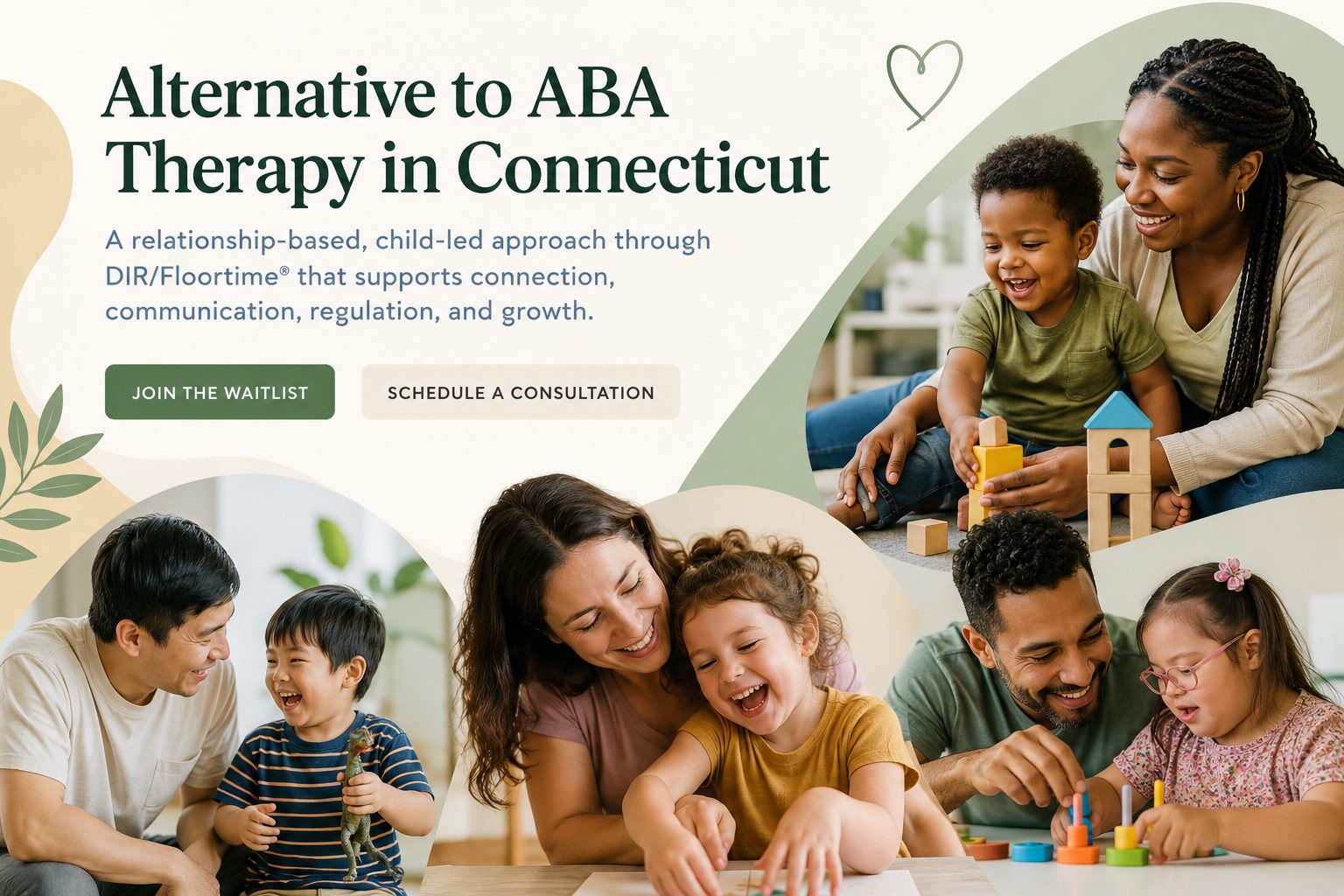
Looking for a different approach to autism therapy?
If you’re exploring options beyond traditional behavior-focused therapy, you may be wondering what else is available.
We believe the most important first step is understanding your child — their strengths, communication style, interests, sensory needs, and the ways they connect with the world.
If you are looking for alternatives to ABA therapy in Connecticut, this page explains how DIR/Floortime® differs and where each approach puts its emphasis.
Understanding ABA therapy
ABA (Applied Behavior Analysis) is a structured approach that often focuses on:
- Building specific skills through repeated practice
- Breaking larger skills into smaller steps
- Measuring progress through observable behaviors
- Teaching skills through structured learning opportunities
ABA can be helpful for many families, particularly when they want specific skill development and measurable goals.
Why some families look elsewhere
Others want a model that places a stronger emphasis on:
- Emotional connection
- Child-led engagement
- Flexibility
- Understanding the meaning behind behaviors

What is DIR/Floortime®?
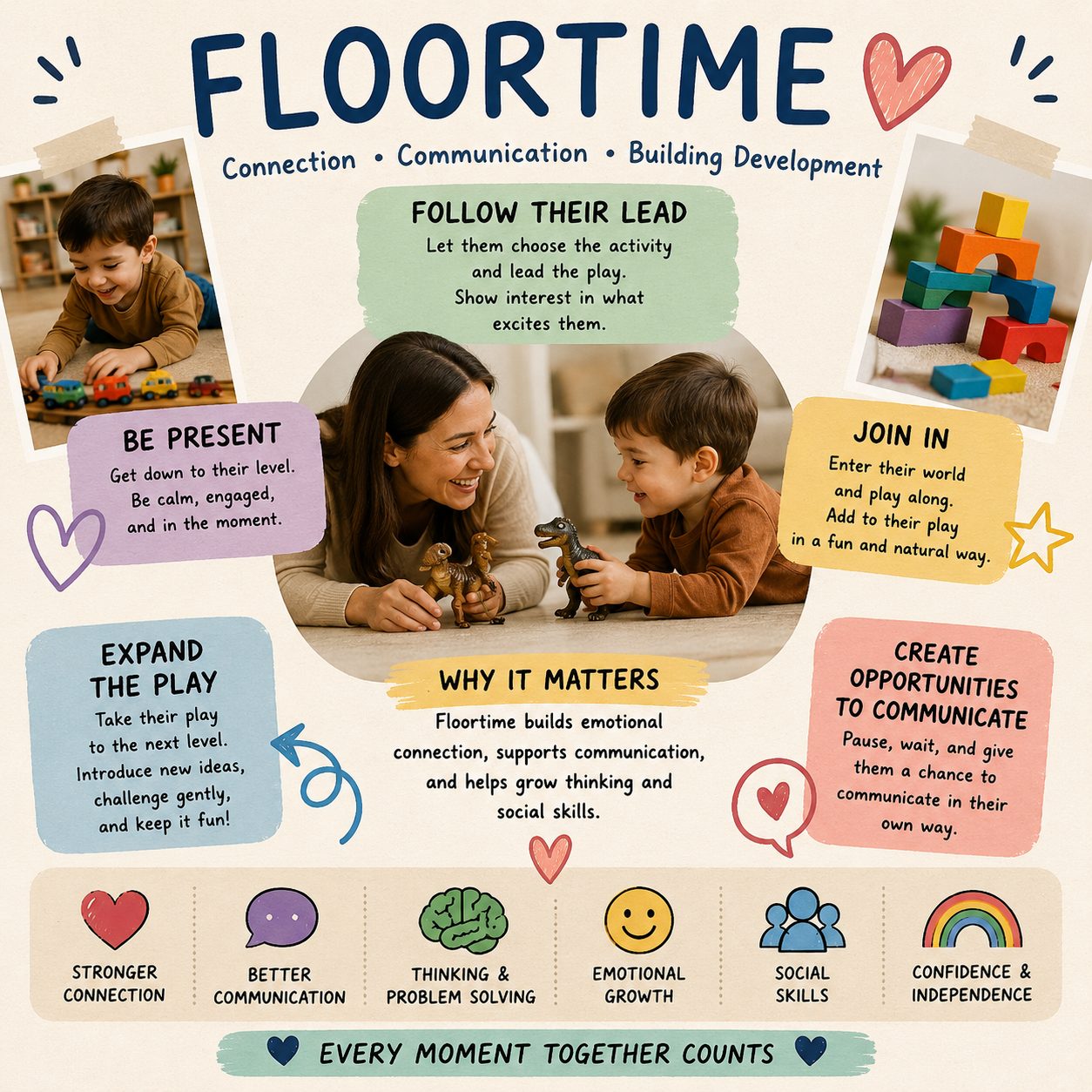
A developmental, relationship-based model that helps children grow through connection and playful interaction. It starts by understanding what motivates your child, how they communicate, and what helps them feel regulated. Our approach, in full
What we use it to support
- Emotional regulation
- Social connection and engagement
- Communication development
- Parent–child relationships
ABA and Floortime, side by side
A simplified comparison. Individual programmes vary, and a good provider of either will adapt to your child.
| ABA therapy | DIR/Floortime® approach |
|---|---|
| Adult-directed instruction | Child-led interaction |
| Focus on behavior change | Focus on emotional development |
| Structured drills and repetition | Sessions follow the child’s interests |
| External rewards for motivation | Intrinsic motivation through connection |
| Skill acquisition first | Relationship and regulation first |
| Compliance-based goals | Connection-based growth |
Common questions about ABA and Floortime
Not sure which is right for your child?
That is exactly what an initial consultation is for. There is no pressure to commit to therapy.