DIR/Floortime® Therapy in CT
Helping Children Grow Through Connection, Play & Relationships
At Growing Through Play, DIR/Floortime® is woven into relationship-based pediatric occupational therapy and caregiver coaching to help you better understand your child and support their development in meaningful, everyday moments.
We meet your child where they are, follow their interests, and use connection and play as pathways for communication, engagement, emotional development, and learning.
Serving families throughout Connecticut, including Wallingford, North Haven, Cheshire, Branford, Guilford, Madison, and surrounding communities.
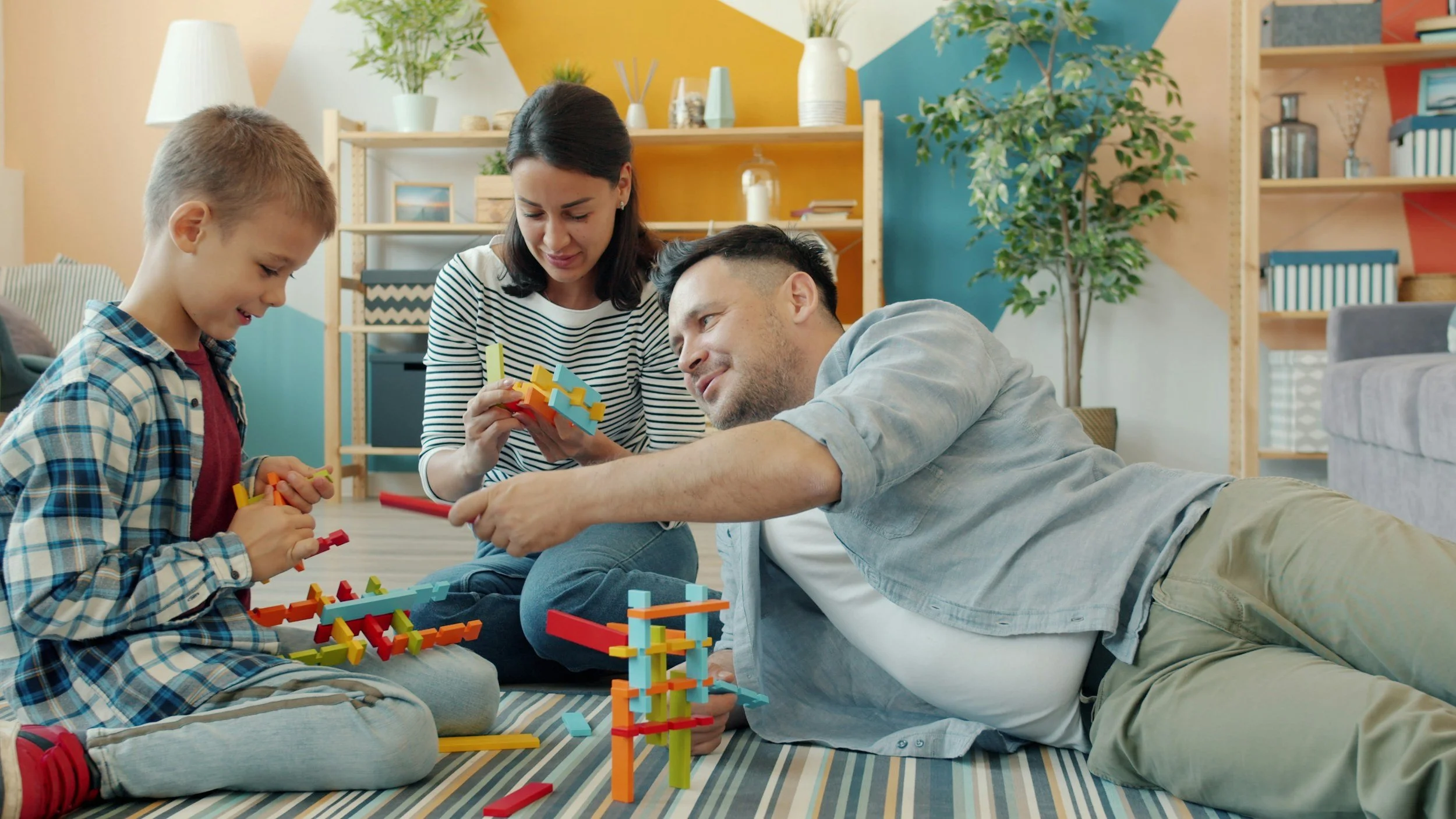
What If Therapy Started With Understanding Your Child—not Changing Them?
Every child has a unique way of experiencing and communicating with the world.
Some children communicate through words. Others communicate through movement, gestures, sounds, facial expressions, play, or the way they seek—or avoid—certain experiences.
Sometimes those signals can be difficult to understand.
DIR/Floortime® gives us a different place to begin.
Instead of asking only, “How do we teach this skill?”, we also ask:
“What is my child communicating?”
“What helps my child feel safe and ready to connect?”
“What brings my child joy?”
“How can I join them in their world and build from there?”
At Growing Through Play, these questions guide the way we approach therapy.

What Is DIR/Floortime®?
DIR/Floortime® is a developmental, relationship-based approach that uses human connection, play, and meaningful interactions to support a child's development.
Dw.IR® stands for:
D — Developmental
Understanding where your child is in their developmental journey and helping them build toward the next step.
I — Individual Differences
Recognizing that every child experiences the world differently, including differences in sensory processing, regulation, motor abilities, communication, and attention.
R — Relationship-Based
Using warm, responsive relationships as the foundation for learning and development.
Floortime® is the practice of putting these ideas into action through playful, engaging interactions that follow the child's interests and ideas.
Rather than focusing only on isolated skills, DIR/Floortime® looks at the whole child and the relationships that support development.
The goal is to create meaningful opportunities for your child to connect, communicate, engage, problem-solve, and grow.
Who is it for?
DIR/Floortime® can support children with a wide range of developmental and individual differences.
At Growing Through Play, we commonly work with families who are looking for support with:
Autism and neurodevelopmental differences
Communication and social communication
Engagement and shared attention
Emotional regulation and co-regulation
Sensory processing differences
Delays in play or social-emotional development
Difficulty connecting with others
Transitions and everyday routines
Developmental delays
Building confidence and participation in everyday activities
Your child does not need to fit into a particular box to benefit from a relationship-based approach.
We start with your child, their strengths, their interests, and what matters most to your family.
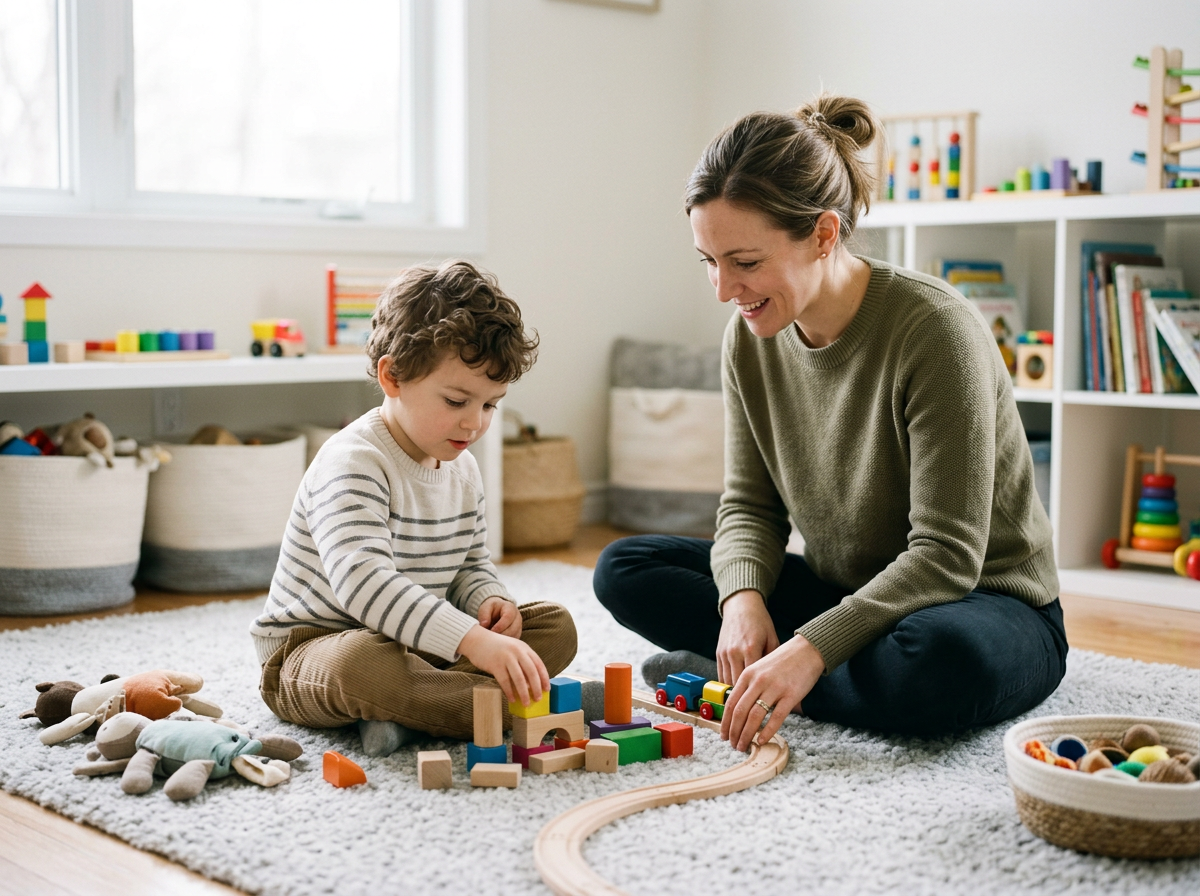
So What Does Floortime Actually Look Like?
Floortime may look like play—but there is thoughtful purpose behind the play.
We don't simply put toys on the floor and wait for something to happen.
We watch.
We listen.
We notice.
We join.
We follow your child's ideas and interests while creating opportunities for back-and-forth interaction.
A child may be lining up cars, spinning a toy, jumping on a couch, opening and closing a container, looking through a book, or moving around the room.
Instead of immediately redirecting them to something we have chosen, we look for a way to enter their world.
From there, we create opportunities for:
Connection
Building a relationship around something your child already enjoys.
Engagement
Helping your child stay connected with another person during an enjoyable interaction.
Communication
Creating reasons to gesture, vocalize, use words, look, move, or otherwise communicate.
Back-and-Forth Interaction
Building longer and more meaningful circles of communication.
Shared Problem-Solving
Helping your child experience the joy of figuring something out together.
Growing Ideas Through Play
Expanding your child's play and interactions without taking away their ideas.