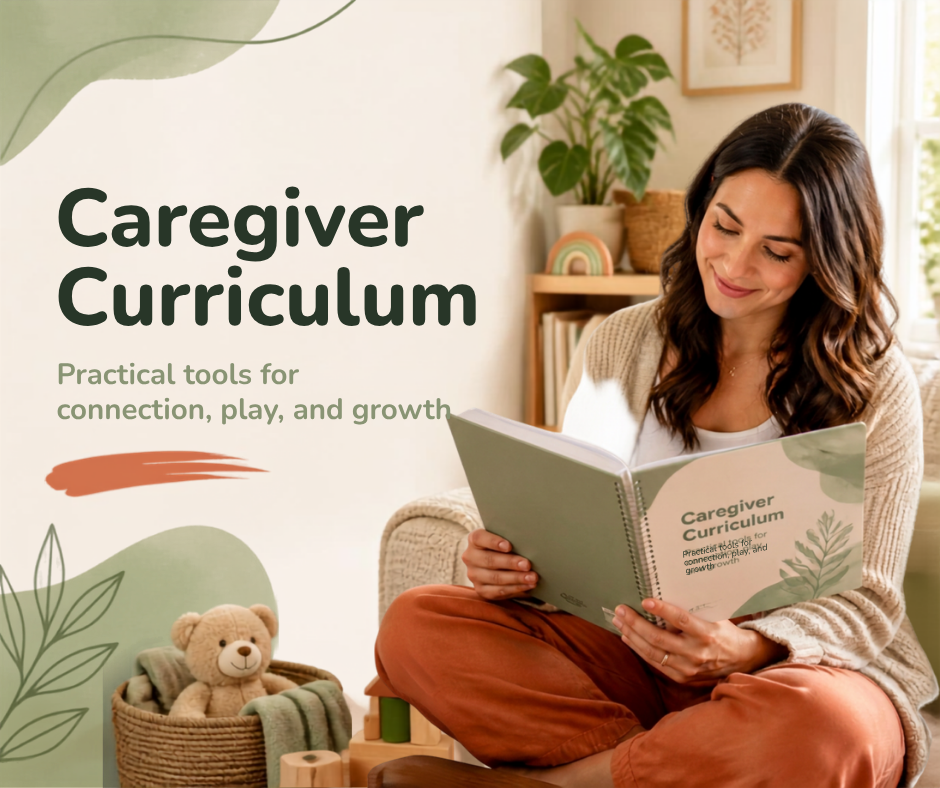
What Makes Growing Through Play Different?
At Growing Through Play, DIR/Floortime® is not separated from the rest of your child's development.
As a pediatric occupational therapist, I also look at how your child's sensory processing, regulation, motor development, play, communication, and everyday activities affect their ability to participate and connect.
That means we can ask both:
“How can we build connection and communication?”
and
“What might be making it harder for this child to participate?”
We may consider things like:
Sensory preferences and processing
Regulation and arousal
Motor planning and coordination
Fine and gross motor development
Play skills
Daily routines
Feeding and mealtime participation
Self-care
Environmental supports
Communication and engagement
This combination allows therapy to look beyond a single skill and consider the whole child.
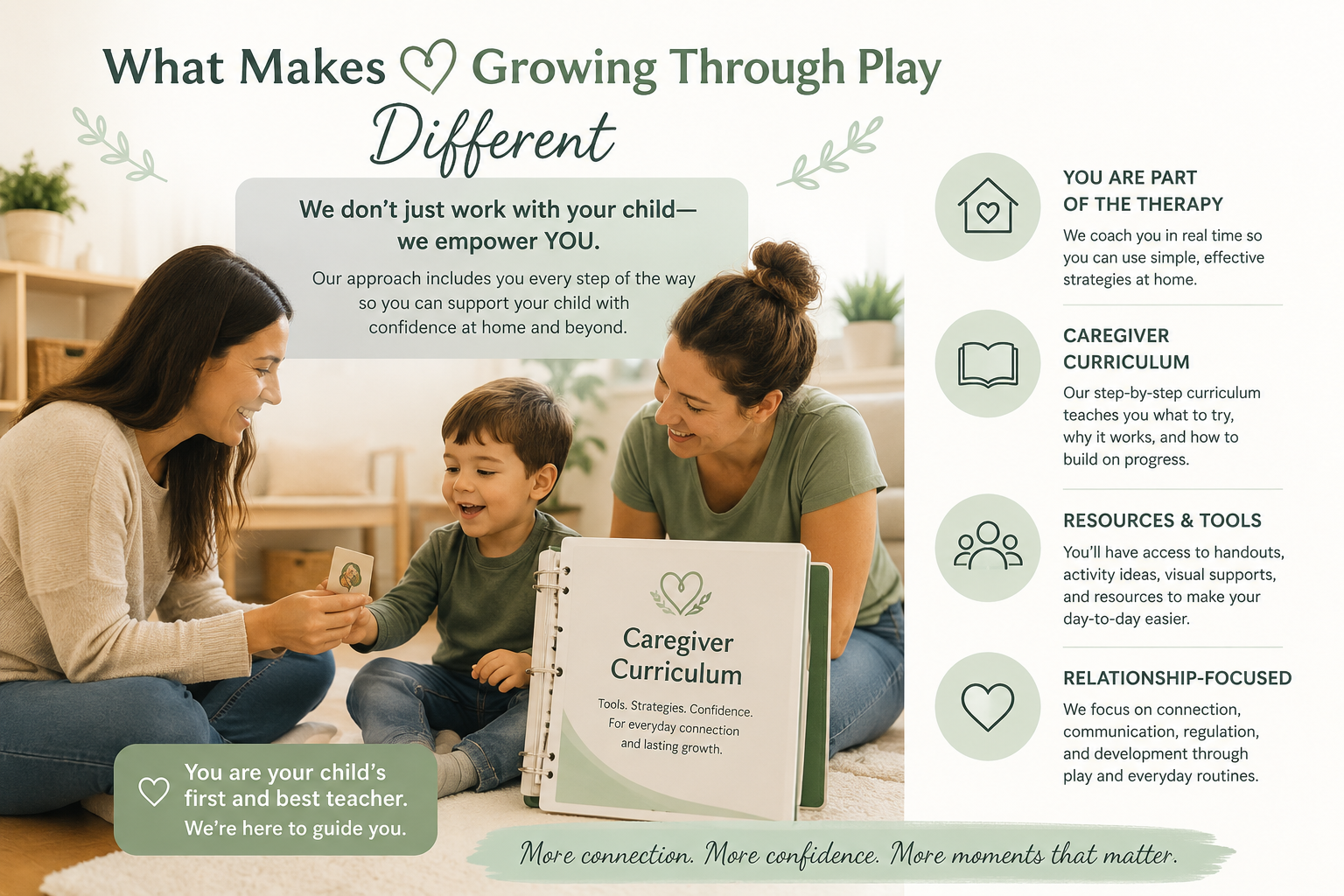
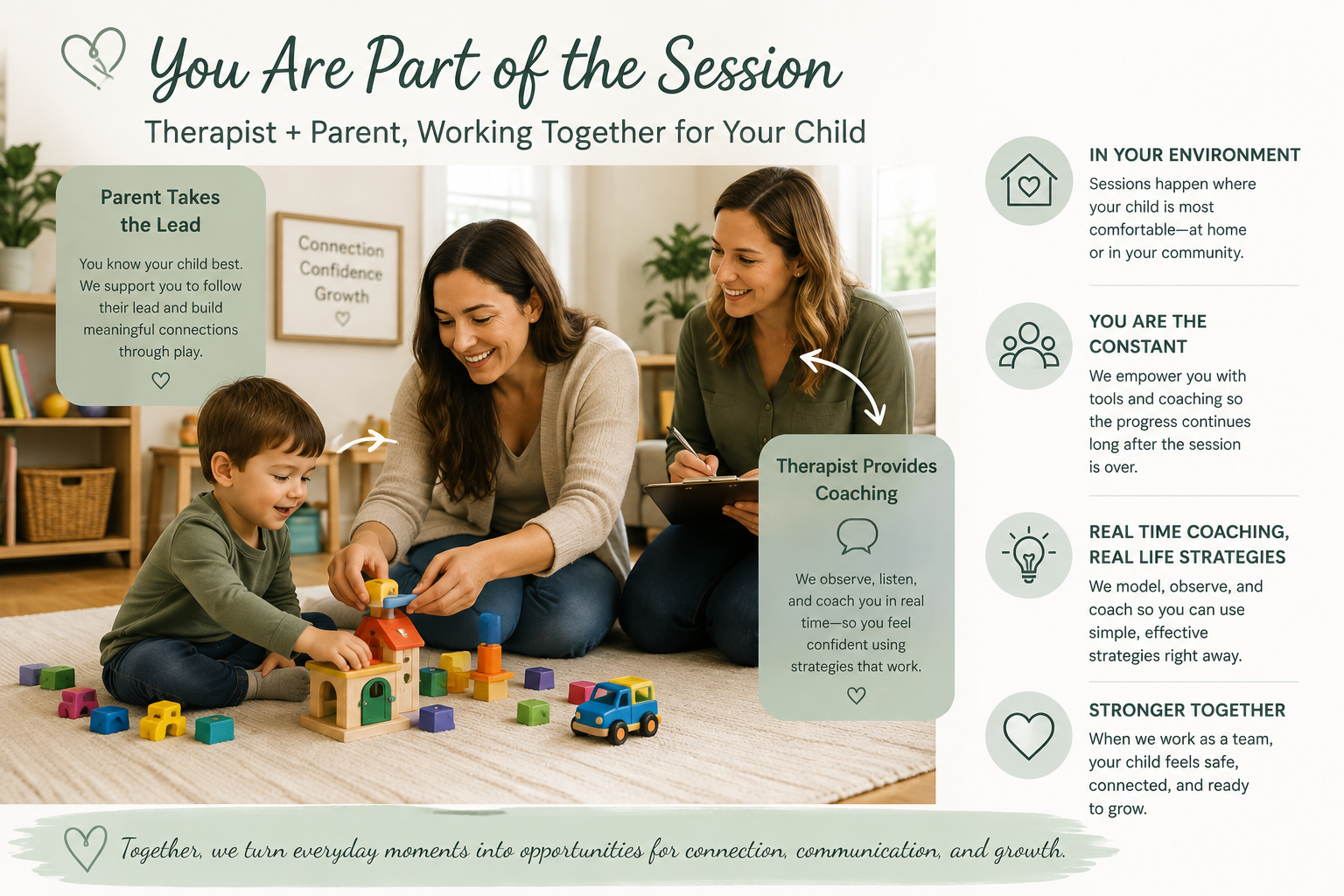
You Are Part of the Therapy
Your child spends far more time with you than they ever will in a therapy session.
That is why caregiver coaching is an important part of Growing Through Play.
You don't need to become a therapist.
You don't need to memorize a list of techniques.
You simply need to understand your child a little more deeply and have practical ways to respond in the moments that happen every day.
Together, we'll explore how you can:
Follow your child's lead
Notice and respond to communication
Create more opportunities for back-and-forth interaction
Support regulation through co-regulation
Use your child's interests to build engagement
Turn everyday routines into opportunities for connection
Feel more confident when challenging moments arise
The goal isn't for you to recreate a therapy session at home.
The goal is to help you feel confident connecting with your child in real life.
HOME-BASED FLOORTIME
Children don't live in a therapy room.
They live at home.
They play in the living room. They eat at the kitchen table. They struggle with transitions. They explore their favorite places. They interact with siblings and caregivers.
Whenever possible, Growing Through Play brings therapy into these natural environments.
Home and community-based sessions allow us to see your child's strengths and challenges where they actually happen—and help you practice strategies within your family's real routines.
This might mean:
Playing together on the floor
Supporting a difficult transition
Finding ways to connect during mealtime
Following your child's interests
Building communication during everyday routines
Helping your child participate in meaningful family activities
The goal is to make therapy meaningful beyond the session itself.
A Caregiver Curriculum Built Into Your Journey
Because the Most Important Therapy Happens Between Sessions
At Growing Through Play, we don't want caregivers to leave a therapy session wondering, “Okay…now what do I do at home?”
That's why caregiver education is woven into the Growing Through Play experience.
Our Growing Through Play Caregiver Curriculum was created to help you better understand your child's development, communication, sensory needs, regulation, play, and relationships—and give you practical strategies you can use in everyday life.
You don't need to become a therapist.
You don't need to spend hours practicing complicated techniques.
You need tools that make sense for your child and your family.
Learn. Practice. Reflect. Grow.
Throughout your journey, we'll explore topics such as:
Understanding Your Child
Learn how your child's developmental level, individual differences, sensory experiences, and communication style influence the way they interact with the world.
The Floortime Mindset
Learn how to slow down, observe, follow your child's lead, and use their interests as opportunities for connection and development.
Building Connection Through Play
Discover how ordinary play can become an opportunity for communication, engagement, shared attention, problem-solving, and relationship building.
Supporting Regulation & Co-Regulation
Learn to recognize what your child may be communicating through their behavior and discover ways to support them when their nervous system is overwhelmed.
Growing Communication Naturally
Explore ways to create meaningful reasons for your child to communicate during play, routines, and everyday interactions—whether they communicate with words or in other ways.
Everyday Floortime
Learn how to bring relationship-based strategies into routines like getting dressed, eating, bath time, transitions, errands, sibling interactions, and bedtime.
This Isn't Homework. It's Real Life.
The goal isn't to give you another list of things you have to do.
Instead, we look at the moments that are already happening in your family's life and ask:
“How can we turn this moment into an opportunity for connection?”
A difficult transition can become an opportunity for co-regulation.
A favorite toy can become an opportunity for communication.
A silly game can become an opportunity for back-and-forth interaction.
A frustrating moment can become an opportunity to problem-solve together.
You Leave With More Than a Therapy Session.
As your child's therapist, my goal is not only to support your child's development—it is to help you feel more confident understanding and supporting them.
Through the Growing Through Play Caregiver Curriculum, you'll build a deeper understanding of your child and learn strategies that can continue long after our therapy session ends.
Because when caregivers understand their child, everyday moments can become opportunities for growth.