Understanding Your Options: ABA, DIR/Floortime®, and Finding the Right Fit for Your Child
Every Child Deserves an Approach That Helps Them Feel Seen, Supported, and Understood
When families receive an autism diagnosis or begin noticing developmental differences, they are often faced with many questions:
"What type of therapy is best for my child?"
"How do I know what approach matches my child's needs?"
"How can I support my child's development while honoring who they are?"
At Growing Through Play, we believe the most important first step is understanding your child—their strengths, communication style, interests, sensory needs, and the ways they connect with the world.
Different therapy approaches have different philosophies and goals. Learning about these differences can help you choose the path that feels right for your child and your family.
Understanding ABA Therapy
ABA (Applied Behavior Analysis) is a structured therapy approach commonly used to support children with autism and developmental differences.
ABA often focuses on:
✓ Building specific skills through repeated practice
✓ Breaking larger skills into smaller steps
✓ Measuring progress through observable behaviors
✓ Teaching skills through structured learning opportunities
ABA can be helpful for many families, particularly when they are seeking support with specific skill development and measurable goals.
However, some families begin exploring other approaches because they are looking for a model that places a stronger emphasis on:
Emotional connection
Child-led engagement
Flexibility
Shared problem-solving
Understanding the meaning behind behaviors
What Is DIR/Floortime®?
A Relationship-Based Approach to Development
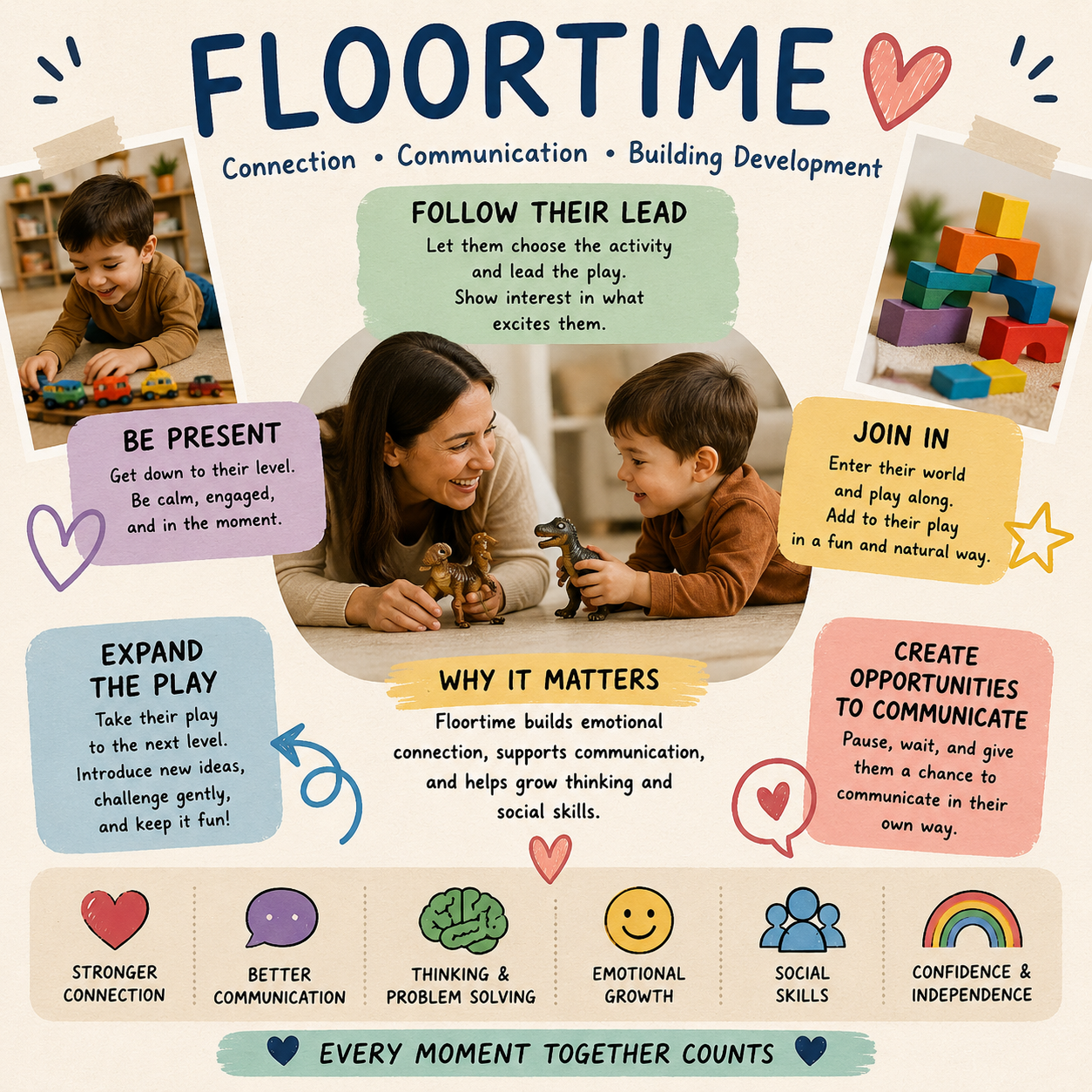
The DIR/Floortime® model (Developmental, Individual Differences, Relationship-Based) focuses on helping children grow through meaningful relationships, emotional connection, and playful interactions.
Instead of starting with a skill a child needs to perform, Floortime begins by understanding:
❤️ What motivates your child?
🌱 How does your child communicate?
🧠 What helps your child feel regulated and ready to learn?
🤝 How can we build connection and shared engagement?
At Growing Through Play, DIR/Floortime® and pediatric occupational therapy are used to support:
✓ Emotional regulation
✓ Social connection and engagement
✓ Communication development
✓ Flexible thinking and problem-solving
✓ Child-led play and exploration
✓ Parent-child relationships
ABA vs Floortime: Key Differences
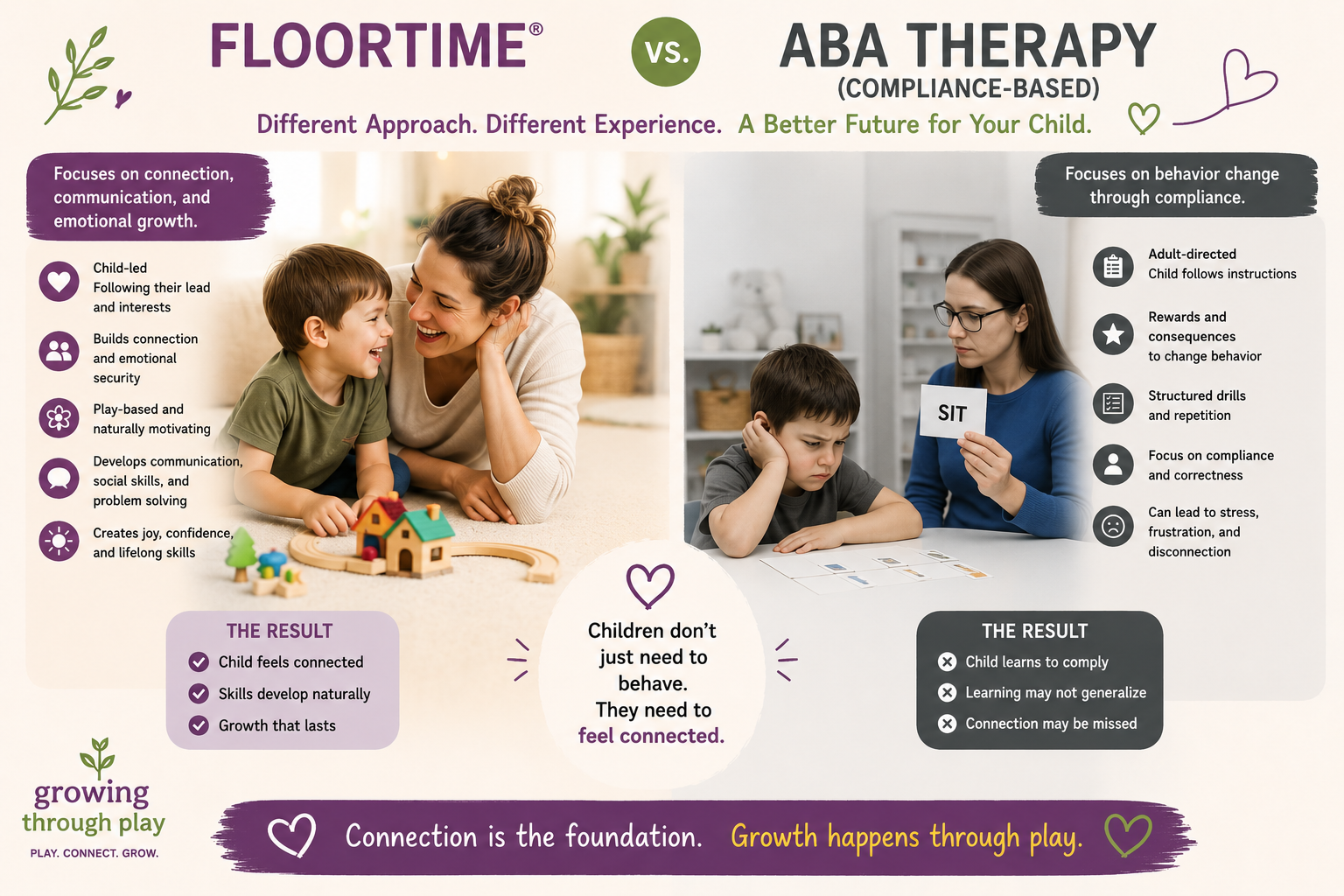
ABA Therapy
Adult-directed instruction Focus on behavior change Structured drills and repetition External rewards for motivation Skill acquisition first Compliance-based goals Session structured by therapist
DIR / Flooring Approach
Child - led interaction Focus on emotional development Intrinsic motivation through connection Relationship and regulation first Connection- based growth Sessions follow child's interests
Many families search for “ABA alternatives in CT” or “Floortime therapy near me” because they want a more:
Natural learning environment
Emotionally supportive approach
Child-led therapy model
Less rigid structure
Stronger parent involvement
Focus on connection, not compliance
Families often tell us they want their child to feel:
Understood
Emotionally safe
Motivated through joy and connection
Why Families Look for ABA Alternatives
A More Natural, Connected Approach to Development

Is Floortime a Good Fit for Your Child?
This approach may be a strong fit if your child:
Has an autism diagnosis or developmental delays
Struggles with emotional regulation or engagement
Has difficulty with transitions or flexibility
Benefits from play-based learning
Needs support building connection and communication
Responds best to warm, responsive caregiving interactions
Serving Wallingford and Surrounding CT Communities
In-Home and Family-Centered Support
We provide DIR/Floortime® and OT services in:
Wallingford
North haven
Branford
Guilford
Madison
Cheshire and surrounding communities